- Thrive25
- Posts
- Issue #488: CKM Syndrome - The Health Problem Hiding in Plain Sight
Issue #488: CKM Syndrome - The Health Problem Hiding in Plain Sight

Ryan Schneider
January 13, 2026

Good morning. It’s Tuesday, January 13th.

In today’s email:
Learn: CKM Syndrome
Try: Cut the Sugar
Measure: 10 Key Biomarkers
In the News: Running Unplugged
Brain Games: Logic Equations
Stat of the Day

The percentage of Americans over 20 that have signs of CKM syndrome. (JAMA, 2024)
Learn
Cardiovascular-kidney-metabolic (CKM) Syndrome
We still talk about disease as if it’s one problem at a time: heart disease, diabetes, kidney issues.
But we aren’t a body made up of isolated parts. We’re one interconnected system.
Weight gain. Brain fog. Fatigue. Heart disease. Diabetes. Kidney problems. These aren’t separate failures. When our cells are under chronic stress, the effects show up everywhere - across the entire system.
A recent study published in JAMA calls out how we should be thinking about this - as a single disease that encompasses all these factors - cardiovascular-kidney-metabolic (CKM) syndrome.
The study calls out CKM syndrome as the number one cause of death in the U.S. - and it hasn’t improved over the last 10 years.
Here are the stages:
Stage 0: no risk factors.
Stage 1: excess body fat and higher than normal blood sugar.
Stage 2: type 2 diabetes, high cholesterol, and high blood pressure.
Stage 3: issues with heart and blood vessels, but no noticeable symptoms.
Stage 4: signs of heart disease, including coronary heart disease, heart failure, stroke, or kidney failure.
Only 10% of adults are Stage 0. Even among people under 44, only 18% qualify as truly low risk.
Most people don’t realize they’re in Stage 1 or 2 - because they still feel “fine.” That’s exactly why CKM progresses quietly for years before symptoms show up.
The good news? Stages 1 and 2 are often reversible.
One System - One Disease
The heart, kidneys, and metabolism don’t operate independently - they move together in a feedback loop:
Poor metabolic health (blood sugar, insulin resistance, inflammation) damages blood vessels
Damaged vessels strain the heart
Reduced circulation and chronic inflammation impair kidney function
Declining kidney function worsens blood pressure and metabolic control
It’s a loop. And once it starts, it tends to accelerate unless something changes.
That’s why the American Heart Association has (finally) shifted away from treating these issues in silos and started framing CKM as a single disease process. The goal isn’t to chase symptoms - it’s to fix the system.
One of the biggest drivers of CKM is what we eat.
The Inverted Pyramid
There’s been a lot already said on the changes the current administration made to our recommended dietary guidelines.
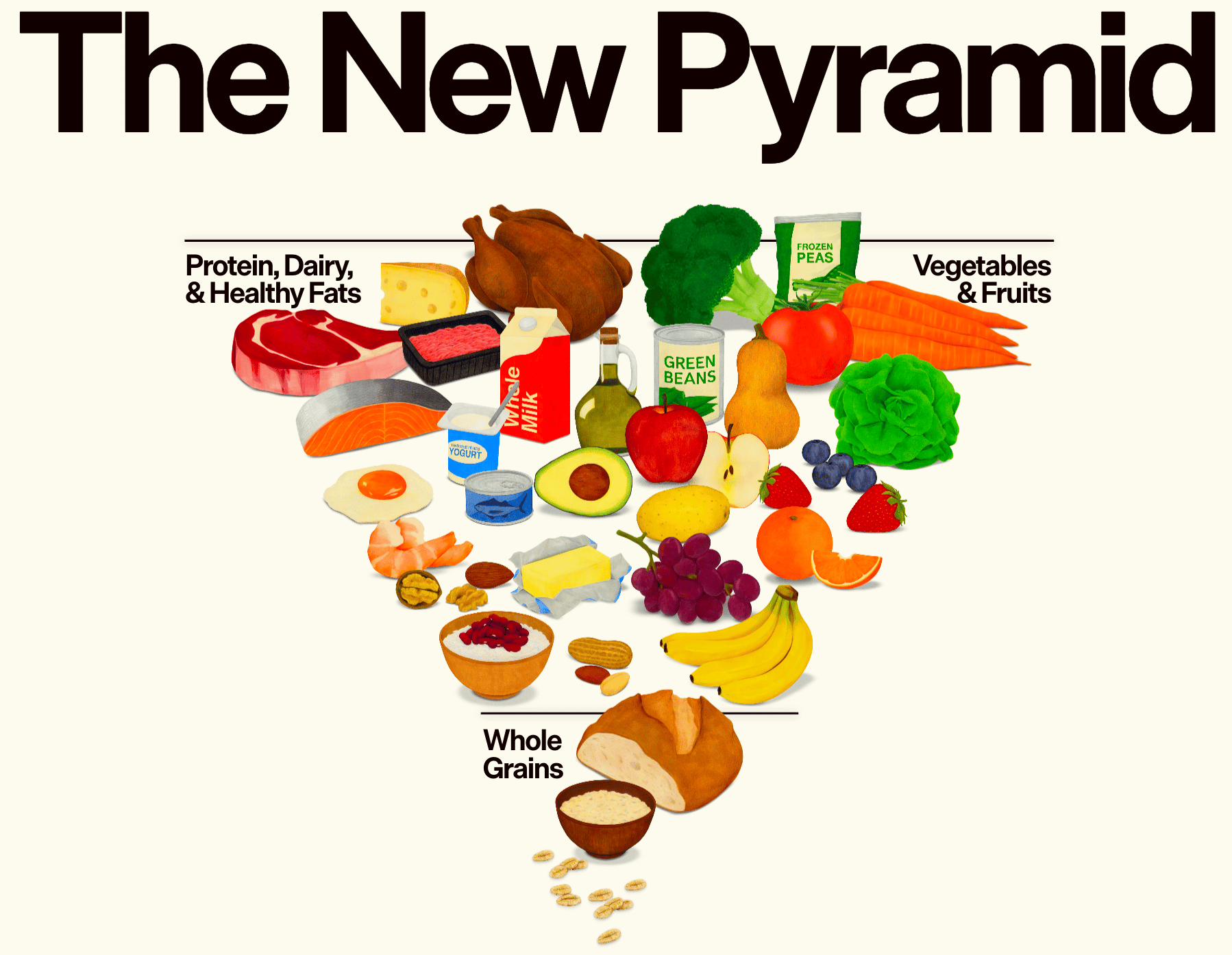
There are plenty of critics and it’s definitely not perfect. But to be honest, it’s a huge step in the right direction.
Here’s what the guidelines get right:
Eat real food - that’s the best place to start
That includes multiple servings of fruits and vegetables throughout the day
Eat more protein and healthy fats
Basically eliminate refined carbs and added sugars
We can nitpick here - for instance:
The visuals emphasize meat and dairy, which has led some people to assume “fat is back, eat all you want.”
But the actual guidance is more precise: saturated fat should be limited to 10% of total fat consumed.
Another major omission: fiber.
Fiber deserves special attention because it affects everything tied to CKM.
Adequate fiber intake improves blood sugar control, feeds gut bacteria, reduces inflammation, and helps the kidneys eliminate waste. If you’re eating enough vegetables, beans, whole grains, and fruit, fiber follows - but it’s too important not to call out directly.
The Real Takeaway
Don’t think “I have a heart problem” or “my kidneys are struggling.”
Think about your entire body.
Improve metabolic health, and you support your heart.
Support your heart, and you protect your kidneys.
The loop works both ways - and with the right habits, it can become a positive flywheel as you age.
One last thing to remember: symptoms are late. Labs are early.
Your bloodwork often shows trouble years before you’ll feel it.
Try
Cut the Sugar
Find just one daily moment where added sugar or refined carbs show up - breakfast, snacks, or late-night dessert - and remove it.
Not forever. Not perfectly. Just one consistent shift.
Lower sugar intake improves blood sugar, insulin levels, triglycerides, and inflammation - all upstream drivers of CKM.
Small change. Huge impact.
Thrive25 Partner Spotlight
As Thrive25 readers, you’ve heard curcumin (an active compound in turmeric) is good for you. But did you know that our body can’t absorb most of what we eat? Until now…
SuperNatural BodyControl is a fast-acting anti-inflammatory and detoxification supplement that utilizes a groundbreaking, patented process to enable BioSoluble® CurcuminTM to penetrate the GI and blood-brain barrier, which is up to 42X more water soluble than standard curcumin.

Kick off your 2026 health goals with BodyControl.
Measure
The 10 Biomarkers for CKM
Here are the biomarkers to make sure you get included in your annual bloodwork to catch any sign of the earliest indication of CKM syndrome:
Metabolic Markers
HbA1c (average blood sugar over 3 months) - ideal range 4.1-5.2%
Fasting glucose - ideal range 72-85 mg/dL
Fasting insulin (often missed, but critical) - ideal range 2-6 µIU/mL
C-reactive protein (CRP) for inflammation - ideal range 0.2-1.0 mg/L
Heart Markers
ApoB - ideal range 21-60 mg/dL
Triglycerides - ideal range 2-100 mg/dL
Lp(a) (just need to measure 1x) - ideal range 2-30 mg/dL
Kidney Markers
Calcium - ideal range 9-10 mg/dL
BUN - ideal range 10-15 mg/dL & Creatinine - ideal range 0.75-1.15 mg/dL
eGFR (filtration health) - ideal range 95-110 mL/min/1.73 m^2
(Ranges may vary slightly by lab - use these as targets, not diagnoses.)
It’s not about being “perfect.” It’s about spotting trends early, understanding your personal risk, and having confident, informed conversations with your doctor - so health supports your life instead of getting in the way.
H&L in the News
Run Unplugged. Feel More: Ditch the headphones and the data. Running without music or a watch sharpens body awareness, improves pacing, and unlocks a deeper runner’s high - helping you reconnect with effort, breath, and why you run. (Outside)
Reversing Alzheimer’s, Reimagined: Scientists reversed advanced Alzheimer’s in mice by restoring the brain’s energy balance, not targeting plaques alone. The findings challenge a century of assumptions - and hint that true recovery may be biologically possible. (StudyFinds.org)
The Focus Gap: Modern life fragments attention into nonstop “urgency.” This research reframes focus as a trainable system - not a personality trait - revealing four science-backed attention muscles that help cut noise, restore clarity, and make progress feel possible again. (Big Think)
Brain Games
Logic Equations
9 variables today - A, B, C, D, E, F, G, H and I - with nine possible values - 1, 2, 3, 4, 5, 6, 7, 8, 9. None of the variables can share the same number. Based on the following equations, what do the variables equal:
4F = A
D = 3H
2E = 4H
B > C
B = 4G
I > E

9 variables and only 6 equations, but you got this! Get out the stop watch and see how fast you can solve!
Credit: Brainzilla
** For answer, scroll to the bottom of the email
Thrive25 Referral Program
Thanks for being part of the Thrive25 community! Want to further support our mission of transforming science into digestible insights to support our health & longevity. Earn Thrive25 swag and other rewards from our Sponsors via our referral program:

Thanks for joining us today!
Want to see what we’re up to? Sign up for early access to our platform
Missed an issue? No problem, check out our newsletter archive
Got feedback, recommendations or stories to share? Tell us what’s on your mind here
Someone send you this email? Sign up here
Brain Games Answer
Answer: Yellow are the values for the variables. A=4, B=8, etc.
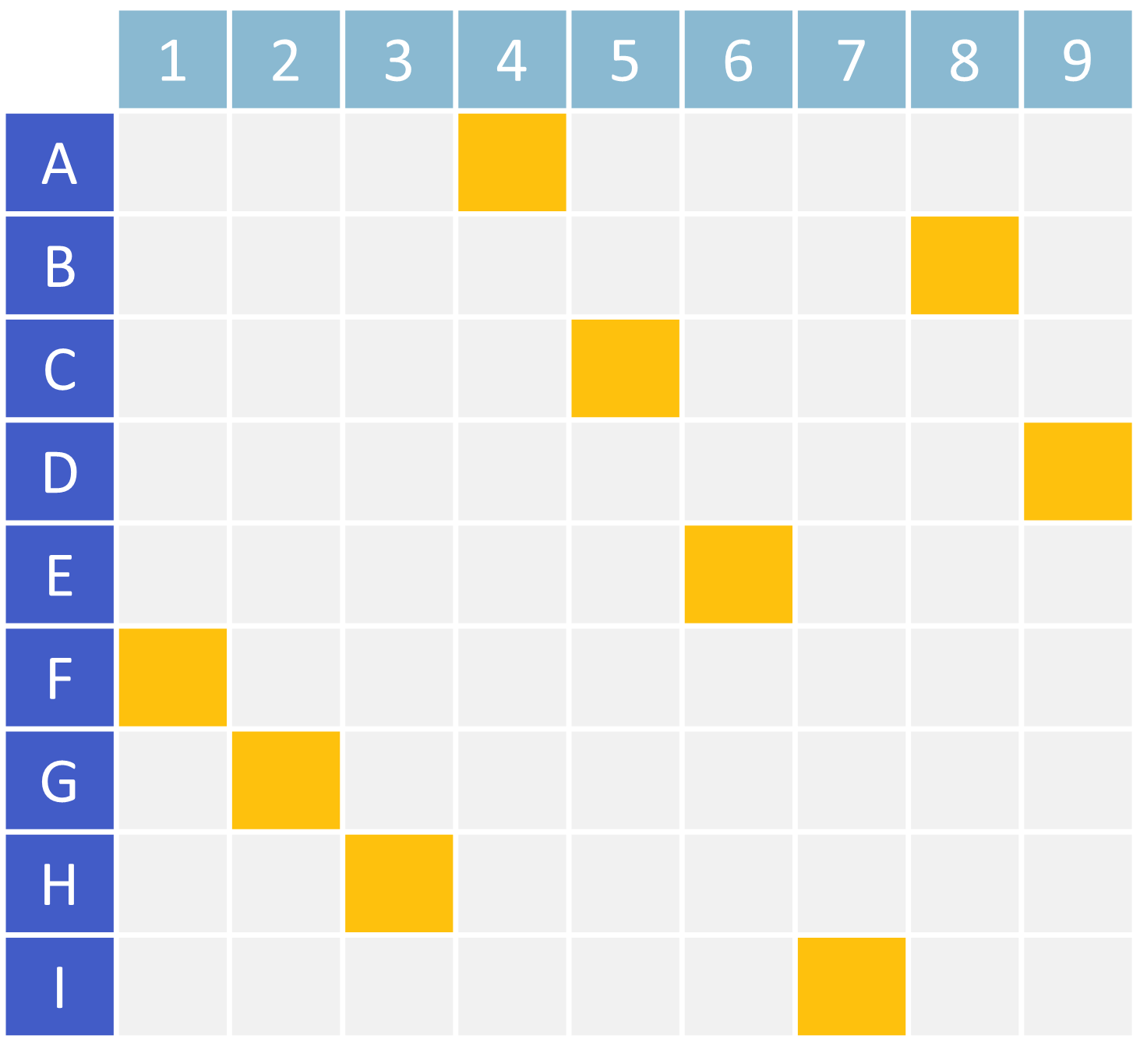
Why?…
Start with equations (1, 5). Both equations have a variable equal to another multiplied by 4. For these to be true with A and B < 10, A and B are in the set {4,8} and F and G are in {1,2}.
Now, look at equation (2). D = 3H, in this case H can only be 1, 2 or 3. But since F,G = {1,2}, H = 3 and D = 9.
We know H, so let’s look at equation (3). 2E = 4 * 3, E = 6.
Since E = 6, go to equation (6). If I > E and 8 (A or B) and 9 (H) are accounted for, then I = 7.
Last, look at equation (4). There’s only one value for C not accounted for, so C = 5. If B > C, then B = 8. If that’s true, returning to the first step: A = 4, F = 1, G = 2.
✅ How long did it take you?

We’re 40-something dads that felt our bodies and minds start to slow down and we’re not ready for that. We found too much information on every subject. So we started Thrive25 to transform what we’ve learned into something useful for the rest of us to spend just 5 min a day to optimize our health & longevity.
This newsletter is for you and we truly value your feedback. Never hesitate to reach out to us at [email protected].
To health!